
May 27, 2026
from Dr. med. Rosmarie Adelsberger
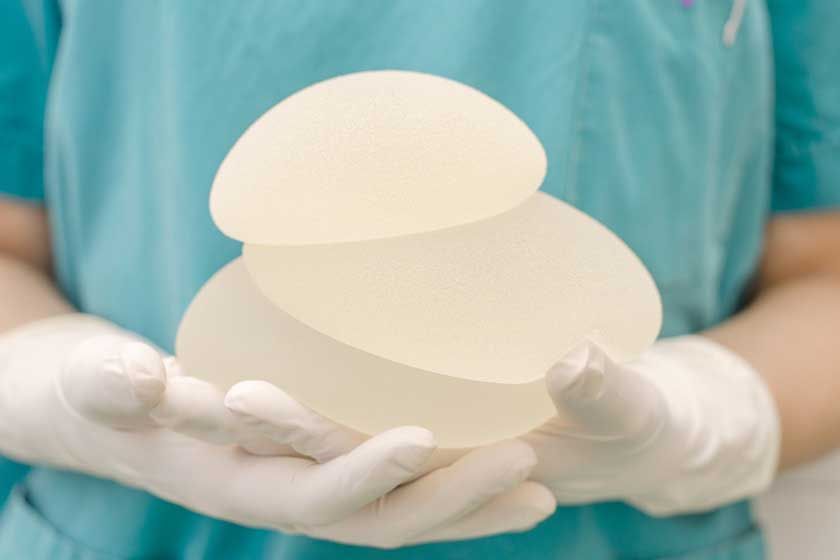
Changing breast implants does not automatically mean that something is wrong. Implants do not have a fixed lifespan and do not always have to be replaced after a certain number of years. It is often more a question of adapting the breast to the changed body, current lifestyle and personal aesthetic sensibilities. Some patients want more volume or a more accentuated breast shape. Others deliberately opt for smaller implants or a more discreet silhouette.
Both can make sense. The decisive factor is not whether larger or smaller is better, but which solution suits you anatomically, aesthetically and in the long term. Changing implants is often not about "more" or "less", but about a new balance between breast shape, body proportions and personal body image.
A common misconception is that breast implants always need to be replaced after a certain number of years. This cannot be said across the board. Modern cohesive silicone implants do not have a fixed "expiry time". The decisive factors are regular clinical checks, possible complaints and the patient's individual situation.
Implants can be changed for medical, functional or aesthetic reasons. These include capsular fibrosis, ruptures, implant displacement such as sagging or lateral slippage, but also the desire for a different breast shape or size.
Even if there are no complaints, regular check-ups can be useful for older implants in order to detect silent ruptures or changes at an early stage.
A change to larger implants usually means the desire for more fullness or a stronger emphasis on the breast shape. Pregnancy, breastfeeding, weight changes or hormonal changes can affect the breast shape. In certain situations, a larger implant can help to compensate for lost volume.
However, whether this makes sense in the long term depends crucially on skin quality, tissue elasticity and existing tissue stress. Larger implants can put more strain on the tissue in the long term and in some cases can also promote ptosis or sagging of the breast.
The desire for smaller implants is often not due to dissatisfaction, but rather to a change in aesthetic expectations or the desire for more naturalness and suitability for everyday use.
Many patients today want breasts that appear less obviously enlarged. Clinically, we often observe a desire for more natural transitions in the décolleté and more harmonious breast contours, particularly among long-term implant recipients, and sport, work or personal comfort requirements can also lead to large implants being perceived as less suitable over time.
Over the years, the relationship between the implant, the skin and the patient's own tissue also changes. A smaller implant may therefore make sense in combination with a tightening or adjustment of the implant pocket.
What seemed to fit ten or fifteen years ago may feel different later on. Clothing style, body image and aesthetic preferences often change over the course of a lifetime. In practice, it has been shown that patients are often better able to assess which breast size suits their body image in the long term after their first breast operation.
The ideal implant size is not determined by trends, but by body proportions, tissue quality and the patient's long-term aesthetic goals.
Numerous anatomical factors play a role when changing implants. Decisive factors include
Therefore, a smaller implant can also lead to a more harmonious and natural-looking result. Conversely, a larger implant can appear inharmonious if the skin, tissue or breast base do not match. A harmonious result is not achieved by the implant size alone, but by the interplay of anatomy, tissue quality and surgical planning.
When changing implants, not only the implant itself is assessed. The existing implant pocket often also plays an important role. Depending on the findings, it may be necessary to adjust, reduce or stabilize the pocket in order to achieve a harmonious breast shape in the long term. Treatment of the capsule or a change in the implant position may also be part of the surgical planning.
Careful assessment of the implant pocket is often crucial for a stable long-term result, particularly in the case of implant displacement or tissue sagging.
An implant change alone is not always sufficient. If there is excess skin or the breast has sagged, a breast lift may be useful or necessary. This is particularly true when changing to smaller implants. If a large implant is removed or replaced by a smaller one, excess skin may remain. In such situations, it is often checked whether a lift or adjustment of the implant pocket is advisable.
Further information can also be found on the treatment page for breast augmentation and breast lift.
Arrange your consultation appointment directly online to get all your questions answered and see the Breast Atelier for yourself. Our specialists are at your disposal.
The medical team at Breast Atelier consists of doctors who specialize in plastic, aesthetic and reconstructive surgery. They have several years of professional experience and a recognized FMH specialist title.
The Breast Atelier consists of specialists with several years of professional experience who are under the medical supervision of Dr. med. Cédric A. George, the founder of the Pyramide Clinic (now Plastic Surgery Pyramide), which is renowned far beyond national borders. His center for plastic surgery has set the standard for quality and reliability in plastic reconstructive and aesthetic surgery.
Under the patronage of the Plastic Surgery Pyramid, these standards are also made accessible to a wider public in the Breast Atelier.

The medical team at the Breast Atelier consists of doctors specializing in plastic, aesthetic and reconstructive surgery.
They have several years of professional experience and a recognized FMH specialist title.
Specialist FMH and EBOPRAS in plastic, reconstructive and aesthetic surgery

Specialist FMH and EBOPRAS in plastic, reconstructive and aesthetic surgery

Specialist FMH in plastic, reconstructive and aesthetic surgery

Specialist FMH and EBOPRAS in plastic, reconstructive and aesthetic surgery
© 2026 Breast Atelier Zürich AG

Upwards
Tel: +41 43 336 73 00
Fax: +41 43 336 73 01
info@breast-atelier.ch