As is well known, weight fluctuations in women affect not only the abdomen, legs, and buttocks, but also—much to the dismay of most women—the breasts. The breast itself consists of connective, fatty, and glandular tissue, with the proportion of fat increasing with age.
Weight fluctuations can alter the volume and shape of a breast that has undergone surgery
Weight fluctuations can affect not only body weight but also the appearance of the breasts. Since the breasts consist of a certain proportion of fatty tissue, a loss of breast volume can occur, particularly during weight loss. This can alter both the shape and the contour of the breasts.
How the breasts develop when weight is regained varies from person to person and is influenced, among other factors, by genetics. While some women experience a return to their previous breast volume, in others the additional fat tissue tends to accumulate primarily in the abdomen, hips, or buttocks.
In addition to volume, the condition of the skin and connective tissue also plays a decisive role. How well the skin can adapt to changes in breast volume depends, among other factors, on individual tissue quality, age, and the extent and rate of weight change.
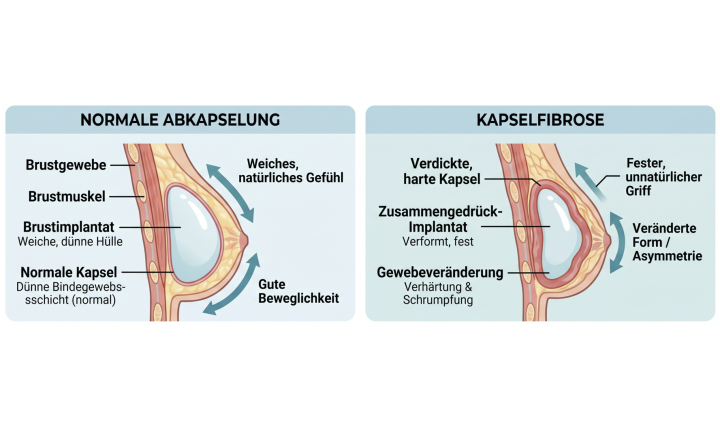
Even breasts that have already undergone surgery are not exempt from these changes. After breast augmentation, for example, significant weight loss can cause the breast implant to become more visible or lead to the appearance of wrinkles and irregularities. This phenomenon is known as “rippling.”
After a breast lift, repeated or significant weight fluctuations can cause the breasts to sag again. In some cases, this may necessitate another breast lift.
The supporting connective tissue can also be strained by repeated changes in breast volume and tissue tension. Depending on the initial condition and tissue quality, special surgical techniques may therefore be necessary to better stabilize the breasts in the long term.
Why Maintaining a Stable Weight Before Breast Surgery Is Important
If you are planning cosmetic surgery, it is recommended that you wait to undergo the procedure until you have reached your desired weight and can maintain it at a stable level. Ideally, your weight should have been stable for several months prior to surgery. This helps ensure a long-term surgical outcome.
Breast surgery can permanently improve the shape and volume of the breasts. However, it cannot prevent the breasts from changing again due to future weight fluctuations.
If you wish to lose weight after breast surgery, a slow and controlled weight loss is recommended. A balanced diet and a healthy rate of weight loss can help your body adapt to the changes as gently as possible. Significant weight fluctuations and repeated yo-yo effects should be avoided whenever possible.
In the video below, you’ll learn what effects significant weight fluctuations can have on a breast that has undergone surgery and why individual tissue quality and the choice of surgical technique play an important role in achieving long-term results.
Short interview with Dr. Caroline Fritz, M.D.